
In brief
- Income vs. debt matters.
- Consolidation or a debt resolution plan may help.
- If not, see a lawyer.
Debt is more common than most people think. A string of bad luck and tough costs can push someone to rely on credit. Credit helps for a while, but it can make it hard to ever get ahead.
Credit card interest adds up fast, and that makes it hard to pay back what you borrowed. Add in a personal loan or a medical bill, and it is easy to feel stuck, worn down, and embarrassed.
That embarrassment is part of why so many people keep their debt amount to themselves. People talk about a new job, a raise, or a new home, but they rarely talk about debt. So when someone is already stuck, it can be a shock how hard it is to get a straight answer on what to do next.
That is why EvaFi built the Anonymous Eligibility Review: a free, 60-second check that shows what you may qualify for, using only what you type in. No name. No phone number. Up front.
If you already know you cannot pay more than the minimum each month, here is where to start. The checks below help you see where you stand. Take the Review anytime you are ready to see your own numbers.
Check One: What do you earn compared to your debt?
What matters is how your income compares to what you owe. This is called your debt-to-income ratio.
It is one of two things that decide if a consolidation loan could work for you. The other is your credit. Rising costs catching up with income is one of the most common reasons people need help. It is rarely about poor planning.
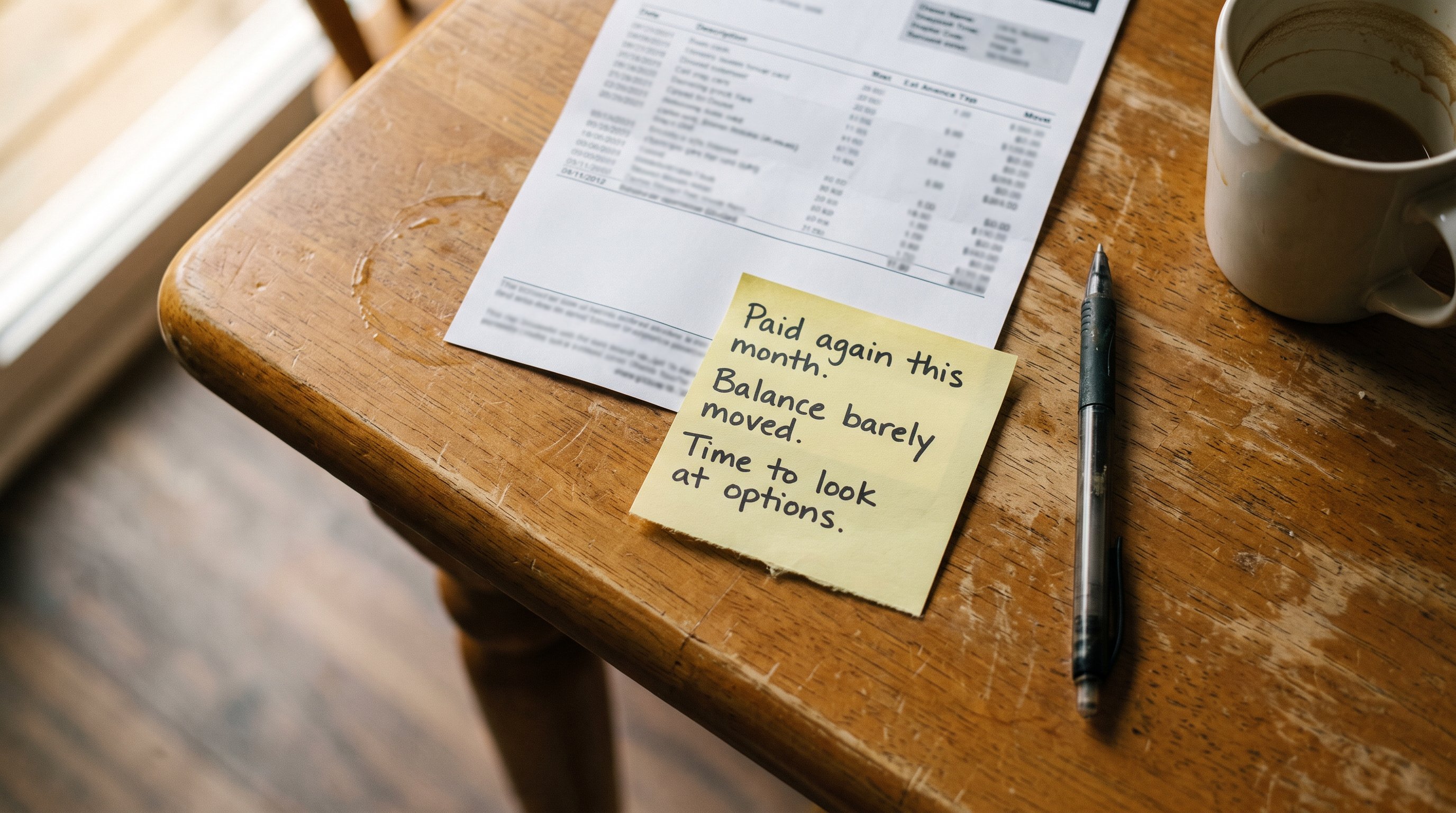
Sound familiar?
One option is debt consolidation. This means combining your debts into one. It usually comes in one of two forms: a 0% balance transfer, or a loan with a lower rate than what you pay now. Credit cards often charge high interest, so a lower rate can mean a lower monthly payment, combined into one bill instead of several.
Where a minimum payment on a $15k balance goes
$15,000 at 22.36% APR
About 65%to interest
Illustration only.
Or, skip the math. Answer a few questions in EvaFi's free Anonymous Eligibility Review and it'll tell you whether you're likely or unlikely eligible for this option plus an estimated monthly payment you could expect. No name or phone number needed to see it.
See where you stand
How it works: EvaFi isn't a lender. It connects you with options from its financial providers and may be paid by them. EvaFi or its providers may contact you about your options.
One note on consolidation loans or 0% cards: pay off the original debt, and stop new charges on those same cards. If spending habits do not change, you could end up with two balances to pay instead of one.
Don't qualify for a consolidation loan? You still have options.
Check Two: Are you getting collection calls?
If creditors or collectors have started calling, that is often a sign your income cannot keep up with your debt anymore. This is when a debt resolution plan may be worth a look. It works directly with your creditors on what you owe.
This is not usually the first option people try. But it can be a strong one for people who do not qualify for new credit. You do not need good credit to qualify, but you do need to commit to the program to get its benefits.
How much do you owe?
A debt resolution plan does not charge interest, but it does charge its own fees. When reviewing these plans, be sure to cover any tax questions you may have before enrolling. Not every creditor agrees to take part, so results can vary. No set amount is guaranteed.
Picking the right provider matters too. Look for one that has been in business for years, has a strong Better Business Bureau rating, and does not resell your account partway through. EvaFi's free Anonymous Eligibility Review does that vetting for you. It shows if you are likely eligible, may be eligible, or need a closer look for a debt resolution plan with EvaFi's trusted providers. You also see an estimated monthly payment and fees, before you share your name.
Calls like these tend to keep coming until something changes. 60 seconds is enough to see if this is the change that helps.
Check Three: Have you tried the above with no luck?
If neither option above has worked, it may be time to talk to a lawyer about bankruptcy.
Bankruptcy is a legal option for people who cannot get out from under their debt alone. EvaFi's Review does not cover this option. If this is where you land, talk to a lawyer. Do not rely on social media, or even an article like this one.
In short: you have options
Overall, if you're stretching and not able to pay off your debts, don't count yourself out for some help. EvaFi's Anonymous Eligibility Review can give you guidance at your own pace and if you want to get even more support, EvaFi agents are available to help you with your questions without obligation.
Free Review
Check your options.
Takes 60 seconds.
Start the ReviewSources
- Federal Reserve Bank of New York, Quarterly Report on Household Debt and Credit, 2026 Q3 (released November 10, 2026) ($1.285 trillion in credit card balances; 5.0% of household debt in some stage of delinquency)
- Federal Reserve Board, G.19 Consumer Credit, released November 6, 2026 (22.36% average APR on credit card accounts assessed interest, Q3 2026)
- Federal Reserve Bank of Philadelphia, Consumer Credit Insights: Rising Delinquencies in the Third District States (Q2 2026 data) (13.8% of U.S. consumers with debt in collections)
- Chart: EvaFi illustration. On a $15,000 balance at the Federal Reserve's 22.36% APR (Q3 2026), one month's interest is $279.50 and 1% of the balance is $150.00, for a $429.50 minimum payment (about 65% to interest).